Description
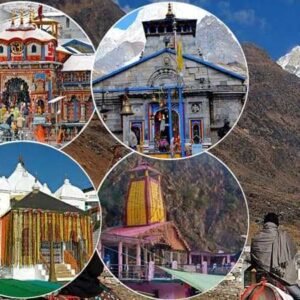
Plan a memorable pilgrimage with our Chardham Yatra Package from Delhi. This sacred journey takes you to the four revered temples of Uttarakhand: Yamunotri, Gangotri, Kedarnath and Badrinath. Surrounded by the majestic Himalayas, these holy destinations offer devotees an opportunity to seek blessings and experience the spiritual beauty of the region.
Delhi is a convenient starting point for travellers planning the Chardham Yatra. With well-organized transportation, accommodation arrangements and travel assistance, Indian Temple Tour helps you plan your pilgrimage according to your travel dates, group size and comfort preferences.
Explore the Four Sacred Dhams of Uttarakhand
1. Yamunotri Dham
Yamunotri Dham is dedicated to Goddess Yamuna and is traditionally the first shrine visited during the Chardham Yatra. Located in the Garhwal Himalayas, the temple is known for its peaceful surroundings, mountain views and deep religious significance. Pilgrims travel to the designated trekking route to seek blessings at the temple.
2. Gangotri Dham
Gangotri Temple is dedicated to Goddess Ganga and is one of the most important pilgrimage sites in Uttarakhand. Situated beside the Bhagirathi River, the temple attracts devotees seeking spiritual peace and blessings. The journey to Gangotri also offers beautiful views of the Himalayan landscape.
3. Kedarnath Dham
Kedarnath Temple is one of the twelve Jyotirlingas of Lord Shiva and a major highlight of the Chardham Yatra. Located in a dramatic Himalayan setting, the temple is reached by a trekking route from the designated base area. Pilgrims should prepare for the physical demands of the journey and allow sufficient time for darshan.
4. Badrinath Dham
Badrinath Temple is dedicated to Lord Vishnu and is located along the Alaknanda River. It is one of the most revered destinations in Hinduism. During your visit, you may also explore nearby attractions such as Mana Village, subject to available time, local conditions and the selected itinerary.
Why Choose a Chardham Yatra Package from Delhi?
Planning a pilgrimage across the Himalayan region requires careful coordination of transport, hotel stays and travel schedules. Booking a Chardham Yatra package from Delhi can make these arrangements easier, especially for families, senior citizens and groups travelling together.
- Convenient travel arrangements from Delhi, based on the selected package.
- Hotel or guesthouse accommodation according to your chosen category.
- Assistance with route planning and important travel arrangements.
- Package options for families, couples, groups and individual pilgrims.
- Customizable travel plans based on your dates, budget and preferences.
- Support with information about registration and pilgrimage guidelines.
Chardham Yatra Package from Delhi: Duration and Route
The duration of the Chardham Yatra depends on the selected itinerary, road conditions and the time required at each shrine. A road-based pilgrimage commonly takes around 10 to 12 days, although shorter or longer options may be available.
A typical route may include Delhi, Haridwar, Barkot, Yamunotri, Uttarkashi, Gangotri, Guptkashi or nearby overnight stops, Kedarnath, Badrinath, Rudraprayag and Rishikesh. The final route and overnight stays should be confirmed before booking.
Best Time to Plan Your Chardham Yatra
The Chardham temples are generally accessible during the pilgrimage season, usually from spring to autumn. May and June are popular months, while September and October can also be suitable depending on weather and road conditions.
Temple opening and closing dates vary each year. Before travelling, check the latest official announcements, weather forecasts, road conditions and registration requirements. Monsoon rainfall may cause landslides, road delays or travel restrictions in some areas.
Travel Tips for Chardham Yatra from Delhi
- Complete the required pilgrimage registration before travelling.
- Carry valid identification and booking documents.
- Pack warm clothing, rain protection and comfortable walking shoes.
- Carry essential medicines and consult your doctor if you have health concerns.
- Allow extra travel time for mountain roads and changing weather conditions.
- Confirm hotel arrangements, meals, transport and package exclusions in advance.
Book Your Chardham Yatra Package from Delhi
Begin your spiritual journey with a well-planned Chardham Yatra Package from Delhi from Indian Temple Tour. Whether you are travelling with family, friends or a group of devotees, we can help you explore suitable travel options based on your preferred dates, accommodation category and budget.
Contact our team to enquire about package availability, the latest pricing, transportation, accommodation and itinerary details before confirming your booking.
Plan your pilgrimage today and prepare for a spiritually rewarding journey to Yamunotri, Gangotri, Kedarnath and Badrinath.
Chardham Yatra Package from Delhi |
|
|---|---|
| Tour Name: | Chardham Yatra Package from Delhi |
| Tour Duration: | 11Nights / 12days |
| Destinations: | Delhi – Haridwar -Barkot – Yamunotri -Uttarkashi- Gangotri- Guptkashi- Kedarnath- Badrinath- Joshimath- Rudraprayag- Rishikesh. |
| Tour Price: | 28,000/- Per Person+5%GST(Min- 6 Person) |
Itinerary
Day 01: Delhi – Haridwar
Arrival at the Airport / railway station meet and assist by ITT executive and later to drive to Haridwar, on arrival transfer to your Hotel. Visit Har-ki-Pauri for Ganga Aarti in evening. Back to your hotel, Night halt.
Haridwar : Haridwar, lying at the feet of Shiva’s hills, i.e., Shivaliks, in the Haridwar district of Uttaranchal Pradesh, is a doorway. Suryavanshi prince Bhagirath performed penance here to salvage the souls of his ancestors who had perished due to the curse of sage Kapila.
Lord Shiva answered the penance, and the river Ganga flowed from his locks, reviving the sixty thousand sons of King Sagara with its bountiful water. Following the tradition of Bhagirath, devout Hindus stand in the sacred waters here and pray for the salvation of their departed elders.
It is the doorway to the sources of the Ganga and the Yamuna, rising 3,000 to 4,500 meters into the snowy ranges of the central Himalayas. Moreover, the ‘Aarti’ worship of the Ganga after sunset, followed by the floating of the ‘dia’ (lamp), is a deeply moving ritual.
Day 02: Haridwar – Barkot
Drive to Barkot via Dehradun & Mussoorie. Enroute visit Kempty Fall and others later drive straight to your Hotel for night halt.
Day 03: Barkot – Yamunotri – Barkot
“First, the journey takes you to Hanuman Chatti, and from there, you continue onward to Janki Chatti, which conveniently shortens the trek by nearly 8 kilometers. Next, the sacred trail to Yamunotri begins—a 6-kilometer stretch that can be covered on foot, by horse, or in a Doli, depending on one’s choice.
Soon after, as you arrive at Yamunotri, a unique ritual awaits; here, devotees cook rice by carefully packing it in a cloth and dipping it into the steaming waters of the holy kund, symbolizing both nourishment and blessing.
Pilgrims take this cooked rice home as ‘Prasad.’ Furthermore, near the temple, ‘Pooja’ can be offered to Divya Shila after taking a bath in Jamunabai Kund’s warm water.
Afterward, having the ‘Darshan’ of the pious ‘Yamunaji,’ devotees return to Hanumanchatti. Later, they drive back to Barkot, and finally, enjoy an overnight stay at the hotel.
- Hanuman Chatti: The confluence of Hanuman Ganga & Yamuna River.
- Yamunotri Temple: Maharani Gularia of Jaipur built the temple in the 19th Century. It was destroyed twice in the present century and rebuilt again.
- Surya Kund: There are a Number of thermal springs in the vicinity of the temple, which flows into numerous pools. The most important of these is Surya Kund.
- Divya Shila: A rock pillar, worshipped before entering the Yamunotri Temple.
Day 04: Barkot – Uttarkashi
Drive to Uttarkashi on arrival Check in the Hotel, Later visit Vishwanath Temple .Night Halt.
Uttarkashi: Situated at the bank of river Bhagirathi. The temple of Lord Vishwanath is located here where a massive iron trident is erected. The other important temples situated here are Annapurna Devi Temple, Ekadash Rudra, Bhairav, Gyaneshwar and Goddess Kuteti Devi.
Day 05: Uttarkashi – Gangotri – Uttarkashi
we proceed to Gangotri (3,048 meters). Along the way, we enjoy the picturesque beauty of Harsil village, the flowing Bhagirathi River, and, moreover, the most magnificent views of the Himalayas. Upon reaching Gangotri, we perform the sacred Darshan.
Afterwards, we return to Uttarkashi, and finally, conclude the day with an overnight stay there.
- Gangotri Temple: The temple, constructed by the Gorkha General Amar Singh Thapa in the 18th Century, is situated on the right bank of Bhagirathi.
- Submerged Shivling: Submerged in the river, this natural rock Shivling is the place where, according to mythology Lord Shiva sat when he received the Ganga in his matted lock. It is visible in winter months when water level decreases.
- Kedar Ganga Sangam: Around 100 Yards from the Ganga Temple flows the river Kedar Ganga. Starting from the Kedar Valley, this river meets the Bhagirathi on its left bank.
Day 06:Uttarkashi- Guptkashi
Early morning, drive to Guptkashi .On Arrival Check in Hotel, night halt.
Day 07: Guptkashi – Kedarnath
In the morning, drive to Sonprayag. From here, the trek to Kedarnath (3,584 meters) begins either on foot or by pony/Doli.
During the journey, tour members should carry personal medicines, heavy woolens, toiletries, and clothes for an overnight halt at Kedarnath. Upon arrival, check in at the hotel. Afterwards, visit the sacred Kedarnath Temple. Later, return to Guptkashi, and finally, enjoy the night halt.
- Gaurikund: At a distance of 5kms from Sonprayag and at an altitude of 1982 meters, one can take bath in the hot water pond here and visit the Gauri Temple. This is the place where Goddess Parvathi meditated to attain Lord Shiva. It is the base for a trek to Kedarnath.
- Kedarnath: The Kedarnath shrine, one of the 12 jyotirlingas of Lord Shiva, is a scenic spot situated, against the backdrop of the majestic Kedarnath range. Kedar is another name of Lord Shiva, the protector and the destroyer.
According to legend, the Pandavas after having won over the Kaurava in the Kurukshetra war, felt guilty of having killed their own brothers and sought the blessings of Lord Shiva for redemption.
He eluded them repeatedly and, while fleeing, took refuge at Kedarnath in the form of a bull. When they followed him, he dived into the ground and left his hump on the surface.
Lord Shiva revealed the remaining parts of his body at four other places, and devotees worship them as his manifestations.
First, the arms appeared at Tungnath; then, the face emerged at Rudranath. Afterwards, the belly manifested at Madhmaheshwar, and finally, the locks of hair along with the head appeared at Kalpeshwar. Consequently, Kedarnath together with these four shrines is revered collectively as the Panch Kedar.
Day 08: Kedarnath- Guptkashi
Morning take darshan at Shree Kedarnath Ji, later back to Guptakashi by Trek. Overnight stay.
Day 09: Guptkashi – Badrinath
Drive to Badrinath via Joshimath. Check in Hotel. Later at evening visit Badrinath Temple for Aarti. Overnight stay.
Badrinath, which is one of the ‘Four Dhams,’ is also among the most celebrated pilgrimage spots of the country.
Moreover, it is situated at an elevation of 3,133 meters, while being guarded on either side by the two mountain ranges known as Nar and Narayan. In addition, the towering Neelkanth Peak provides a splendid backdrop.
This revered spot was once carpeted with wild berries. Thus the place got the name “Badri van”, meaning “forest of berries”.
- Tapt Kund : Natural thermal springs on the bank of the river Alaknanda, where it is customary to bathe before entering the Badrinath temple.
- Narad Kund : A recess in the river, near Tapt Kund, forming a pool from where the Badrinath idol was recovered.
- Brahama Kapal : A flat platform on the bank of river Alaknanda. Hindus perform proppitiating rites for their deceased ancestors.
- Sheshnetra :1.5kms. away is a boulder having an impression of the legendary serpent, better known as the Sheshnag’s eye.
- Charanpaduka :3kms. away is a beautiful meadow where the footprint of Lord Vishnu is seen on a boulder.
- Mata Murty Temple :Devoted to the mother of Sri Badrinathji. Other important temples include Sesh Netra Temple , Urvashi Temple and Charanpaduka. Inhabited by an Indo-Mongolian tribe, it is the last Indian village before Tibet .
- Vasundhara : As the name suggests, vasundhara is a magnificent water fall. This place is 5 kms. from Badrinath out of which 2 kms. is motorable upto Mana.
- Bhim Pul: On the other side of Mana village, a massive rock forming a natural bridge, lies over the roaring Saraswati river. It presents a spectacular view of water thundering down through the narrow passage under the rock and is believed to have been placed there by Bhim, the second eldest among the five Pandava brothers.
- Vyas Gufa (cave) :Near Mana Village, this is a rock-cave where Ved Vyas is believed to have composed the Mahabharata and the pauranic commentaries.
Day 10: Badrinath – Joshimath – Rudraprayag
Early morning, pilgrims after having a bath in the Taptkund have the Darshan of Badrivishal. Brahamakamal is significant for Pinddan Shraddh of ancestors (Pitrus).
There are other interesting sightseeing spot like Mana, Vyas Gufa, Maatamoorti, Charanpaduka, Bhimkund and the “Mukh” of the Saraswati River . Just within the three kms of Badrinathjee. Later drive back to Rudraprayag via Joshimath. Check in Hotel.
To begin with, Joshimath stands gracefully on the slopes above the confluence of the Alaknanda and Dhauliganga rivers. Moreover, its location offers a majestic setting that highlights both natural beauty and spiritual significance.
Adi Shankaracharya established four ‘Maths,’ and he placed one in Joshimath, where he installed the deity in the temple for people to worship. The town has many temples, the most important being the temple of Nir Singh, dedicated to Lord Vishnu.
The left arm of this deity is withering with time, and according to popular belief, the day it completely withers, the Badrinath Valley will cease to exist. Consequently, the Gods will transfer their residence into the neighboring Niti Valley at Bhavishya Badri.
Joshimath is connected by regular bus service to Rishikesh, Haridwar, Badrinath and many other centres in the region.
Day 11: Rudraprayag – Rishikesh- Haridwar
In the morning, drive back to Rishikesh. Upon arrival, check in at the hotel. Afterwards, proceed for local sightseeing of Rishikesh. In the evening, enjoy an overnight stay.
Moreover, Rishikesh—known as the ‘place of sages’—is a celebrated spiritual town situated on the banks of the Ganga and, in addition, is surrounded by the Shivalik range of the Himalayas on three sides.
It is said that when Raibhya Rishi did hard penances, God appeared by the name of ” Hrishikesh ” and this area hence firth came to be known as Rishikesh.
Temples & Sight Seeing – Laxman Jhulla, Ram Jhulla, Triveni Ghat, Bharat Mandir, Ashram, Parmarth Ashram.
Day 12: Haridwar – Delhi
Drive back to Delhi . On Arr. Delhi, transfer to Railway Station / Airport.
Price
Call for Best Deal: +91 9870240354
Hotels Details:
Call for Best Deal: +91 9870240354
Inclusions
- Pick up and drop from airport/railway/bus station.
- Accommodation on double/twin sharing basis.
- All breakfast included at hotels.
- All transfers and sightseeing by private A/C vehicle.
- Driver’s bata, toll, parking, road tax, fuel charges All applicable taxes.
Exclusion
- Service Tax – 5% GST Extra.
- Any air/bus/rail fare Any other meals not mentioned in package inclusions.
- Any other destination not mentioned in itinerary.
- Any personal expenses such as laundry, room service, mini bar, telephone etc.
- Guide charges/boating charges/entrance fees for any sightseeing
- Any services or activity charges other than those included in inclusions.
- Supplementary cost for festival period, long weekend or peak season .
Chardhakm Yatra package from Delhi FAQ’s
Q1: Why is booking a Chardham Yatra package from Delhi more convenient?
A1: Delhi serves as a major travel hub with excellent connectivity to Uttarakhand. Booking a Chardham Yatra package from Delhi ensures seamless transfers, professional planning, and complete travel support from start to finish.
Q2: Do I need to complete any registration before starting the Chardham Yatra?
A2: Yes, Chardham Yatra registration is mandatory as per Uttarakhand government guidelines. Trusted travel services usually handle the entire registration process, including biometric registration and permits, on behalf of the pilgrims.
Q3: How early should I book a Chardham Yatra package from Delhi?
A3: It is advisable to book at least 2–3 months in advance, especially for peak seasons like May–June. Early booking ensures better accommodation, smoother registration, and preferred travel options.
Q4: Are single-traveler or solo pilgrim packages available?
A4: Yes, solo travelers can book Chardham Yatra packages from Delhi. Shared accommodation and group tours help reduce costs while ensuring safety and companionship during the journey.
Q5: How much does a Chardham Yatra package from Delhi cost?
A5: The cost depends on travel style and duration. Budget packages start from economical ranges, while premium, luxury, and helicopter packages are priced higher based on comfort, speed, and services included.
Q6: Are helicopter services available from Delhi for Chardham Yatra?
A6: Helicopter services are available from Dehradun, which pilgrims reach from Delhi. Helicopter Chardham Yatra packages significantly reduce travel time and physical effort.
Q7: Can I register for multiple pilgrims in one application?
A7: Yes, group registration is allowed under one mobile number or email.
Q8: Why should I book a Chardham Yatra package from Delhi through a travel agency?
A8: Booking through a trusted travel agency (Indian Temple Tour) ensures smooth travel arrangements, reliable accommodation, registration support, experienced drivers, and emergency assistance—allowing pilgrims to focus fully on their spiritual journey.